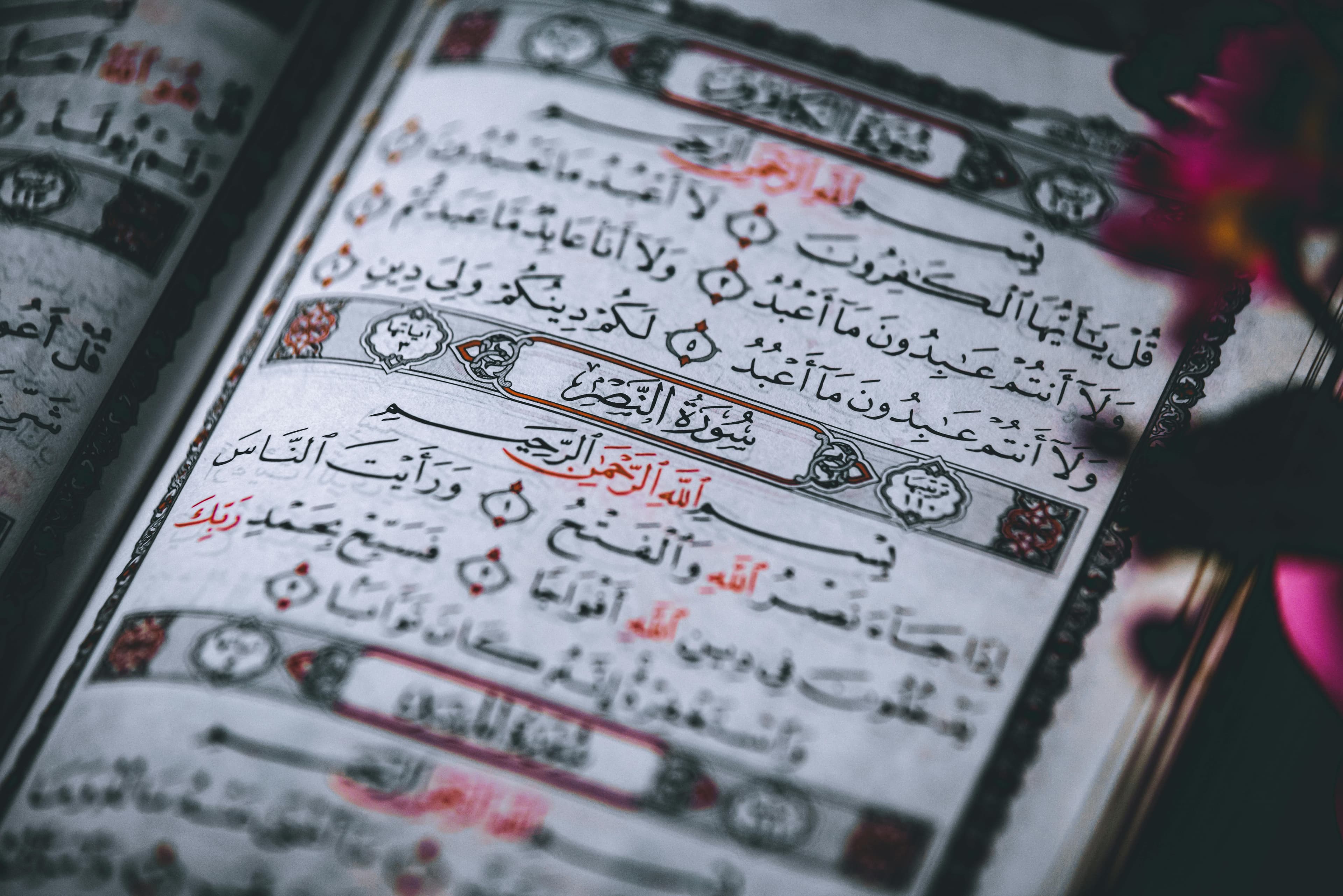
A mother in Toronto once asked me, mid-trial, whether she'd made a mistake waiting until her son was nine to start. He'd been sitting with the Quran in her lap since he was three, she said, and she felt like she'd missed a window. I told her she hadn't, and I meant it. But the question of the best age to start Hifz is one I get asked almost every week, and the honest answer is more nuanced than "the younger the better."
There is an ideal range. There are genuine advantages to starting young. But starting before a child is ready, emotionally, linguistically, and in terms of foundational recitation, is one of the most common reasons Hifz stalls in the first year.
What the brain actually does differently at different ages
Children between roughly five and twelve years old have a period of heightened language acquisition and memory consolidation. This is real and well-documented, young brains absorb auditory patterns, including the rhythmic, melodic patterns of Quranic Arabic, at a rate adult brains simply cannot match. A child who begins memorisation at seven and works consistently for two years will almost certainly retain that material more deeply than an adult who puts the same number of hours in.
That's the argument for starting young. It's a good one.
The counter-consideration is that memorisation requires certain cognitive tools that develop with age. The ability to sit with focused attention for 20 minutes. The ability to hold a sequence in working memory while repeating it. The ability to notice one's own errors and self-correct. These capacities are present in some six-year-olds and absent in some eight-year-olds, children develop at different rates, which is why the best age to start Hifz cannot be given as a single number.
What I see at each age in my own classes
Age 5 to 6: At this age, some children are genuinely ready for introductory memorisation, short Surahs from Juz Amma, individual verses, foundational lines. What they cannot do is hold the pressure of formal Hifz. A structured programme at five or six means very short sessions (15 to 20 minutes maximum), a playful approach, and zero expectation of the disciplined Sabaq-Sabqi-Manzil cycle. Think of it as planting seeds rather than building a structure.
I start some children on short Surahs at five, and it works beautifully when the parents understand that the goal at this stage is love of the Quran and confidence with the sound, not lines per week.
Age 7 to 8: This is often when the shift happens. A seven-year-old who has been introduced to Arabic letters through the Noorani Qaida and can read basic Arabic, even slowly, has the tools to begin structured memorisation. The attention span is longer, the ability to receive correction is more developed, and the phonetic flexibility of the young brain is still very much intact.
In my experience, seven and eight are genuinely sweet-spot years for beginning formal Hifz. Children at this age move through new material faster than the five-year-olds but with much better retention than the eleven or twelve-year-olds who are starting later. The emotional investment is also often high, a seven-year-old who is told she is going to memorise the Quran like her grandmother takes real pride in that.
Age 9 to 10: Still a strong age to begin, with slightly different dynamics. Nine-year-olds tend to have better comprehension of what they're doing, they understand that Hifz is a multi-year commitment, which can be motivating or intimidating depending on the child's temperament. Their recitation is typically more stable and easier to assess for Tajweed readiness. New memorisation is a little slower than at seven, but revision retention tends to be better.
A child beginning Hifz at nine who practices consistently can expect to complete the full Quran in four to six years, longer than a child who began at seven, but the outcome is no less sound. The Hifz timeline guide by age breaks this down in more detail across different starting ages.
Age 11 to 12: The transition years. Many families start children at eleven or twelve because secondary school is approaching and they want the Hifz underway before the academic pressure of secondary schooling makes it harder to maintain. This logic is reasonable. The challenge is that children at eleven and twelve are also entering puberty, which brings its own emotional turbulence, and the early years of secondary school are socially demanding.
Starting Hifz at eleven or twelve is absolutely possible, I have students who began at this age and progressed well, but it requires a particularly honest conversation with the child about whether they actually want this, not just whether the parents want it for them. A twelve-year-old who is genuinely motivated can move faster than a nine-year-old who is somewhat reluctant.
If you're trying to decide whether your child is ready to begin, a free trial session gives you a much clearer picture than any article can. I'll assess the recitation, talk to your child for twenty minutes, and tell you honestly whether we should begin now or spend three more months on foundation work first.
The prerequisite that matters more than age
Here's what I tell every family who asks about the best age to start Hifz: the question of age is secondary to the question of recitation readiness.
A child who begins memorising the Quran without first being able to read Arabic with basic accuracy is memorising sounds without anchors. The memorisation often holds in the short term because children are excellent at sound pattern imitation. But without the ability to see a verse on the page and read it, the child has no way to check themselves independently, no way to distinguish between two similar verses, and no foundation for the revision work that keeps older memorisation intact.
The full beginner's guide to starting Hifz at home covers this prerequisite in detail, but the short version is: before Hifz, a child should be able to read basic Arabic from the Quran, not fluently, but accurately. That means completing the Noorani Qaida or its equivalent, and working through at least a few pages of the Quran proper with Tajweed correction from a teacher.
How long that preparation takes depends entirely on the child and the frequency of lessons. Some seven-year-olds are reading clean Arabic within four months. Some nine-year-olds take eight months. Neither timeline is a failure, the preparation is the work, and rushing it to get to the "real" Hifz faster is exactly the mistake that produces weak memorisation.
How starting age affects the daily commitment
The daily Hifz commitment also looks different across ages, and parents need to account for this before choosing a start date.
A six-year-old doing 15 minutes of revision and 10 minutes of new material is at capacity. A nine-year-old can handle 30 to 40 minutes of daily practice, with focus. A twelve-year-old can manage 45 minutes, and some motivated teenagers can do an hour. The daily commitment grows as the child grows, but it also needs to be in place from day one.
The families whose children make the best progress at any age share one thing: a consistent daily practice outside class time. The lesson with me is two or three times a week, 30 to 45 minutes. The revision happens every day, seven days a week, including weekends. A family that cannot yet build that daily habit, because school schedules haven't settled, because siblings are in a demanding phase, because the child is in a big transition, should wait a month or two until the conditions are right rather than starting and immediately falling into inconsistency.
Inconsistent early Hifz is worse than delayed Hifz. It creates a child who has memorised some material, partially, with errors, and then lost confidence when the programme couldn't be maintained. That's much harder to rebuild than a clean start at the right time.
Brothers and sisters starting together
I'm frequently asked whether siblings can start Hifz at the same time if there's an age gap between them. The short answer is yes, in separate lessons. A nine-year-old and a six-year-old have genuinely different needs from a session, and pairing them means one is always held back or pushed too fast.
What siblings can do is share a home revision routine. An older sibling who recites their Manzil at the same time as a younger sibling's Sabaq creates an environment where Quran is simply part of daily life, not a separate activity that requires motivation to start. This peer effect is real, and families who set up this kind of shared practice almost always have better outcomes for both children.
The online Quran classes for kids guide covers the broader landscape of when to begin various types of Quran learning, not just Hifz, for children from age four upward, which may be useful reading if you have children at different stages.
What the online Hifz programme offers at each age
The programme I run is structured around the child's actual readiness, not their birth year. When a family comes to me with a child who is "almost eight," I assess where they actually are and build the plan from there.
For children who are ready: I begin with a four-week foundation month that establishes the daily revision habit, maps the first Sabaq correctly, and makes sure both the student and the parents understand the system. The goal of that first month is not lines memorised, it's getting the mechanism right.
For children who need more preparation: I give the parents a specific, time-bounded plan. "Your daughter needs three more months on Arabic reading before Hifz begins. Here's what those three months look like, and here's how we'll know when she's ready." That kind of concrete roadmap is what good Hifz teaching looks like at the start.
Ready to find out where your child actually is? Book a free trial here. We'll spend thirty minutes together, and by the end I'll tell you honestly: ready now, or ready in two months, and why.
The best age to start Hifz is the age at which your child can read Arabic accurately, sit with focused attention for at least 20 minutes, and wants, genuinely wants, to do this. For many children that's seven. For some it's nine. Starting at the right time, with the right foundation, produces a Hafiz who holds the Quran with confidence. Starting too early, without the preparation, produces a child who memorised something and then forgot most of it.
Frequently Asked Questions
What is the best age to start Hifz for a child?
For many children the best age to begin formal Hifz is around seven or eight, when they can read basic Arabic, sit with focused attention for at least 20 minutes, and genuinely want to memorise. Some children are ready at five or six for short Surahs, while others do well starting at nine or even eleven. Readiness, not birth year, is what matters most.
Can a 5 year old start Hifz?
A five or six year old can begin introductory memorisation of short Surahs from Juz Amma, but not the disciplined formal Hifz cycle. At this age sessions should be very short (15 to 20 minutes), playful, and focused on building love of the Quran and confidence with the sound rather than lines per week. In a free trial class Ayesha can assess whether a young child is ready to begin or should spend a few more months on foundations.
Is it too late to start Hifz at 11 or 12?
No, starting Hifz at eleven or twelve is absolutely possible and many students who begin at this age progress well. It does require an honest conversation about whether the child genuinely wants it, since these are puberty and early secondary-school years. A motivated twelve year old can move faster than a reluctant nine year old.
What does my child need to know before starting Hifz?
Before Hifz, a child should be able to read basic Arabic from the Quran accurately, not fluently but without guessing. That usually means completing the Noorani Qaida or its equivalent and working through a few pages of the Quran with Tajweed correction from a teacher. Memorising without this reading foundation leaves a child unable to self-check or distinguish similar verses.
How long does it take to complete Hifz if my child starts at nine?
A child who begins Hifz at nine and practices consistently can usually complete the full Quran in about four to six years. This is a little longer than a child who started at seven, but the outcome is no less sound because nine year olds often have better comprehension and revision retention.
Updated June 2026.
Ready to begin? Ayesha teaches a structured online Hifz program built on the Sabaq, Sabqi, and Manzil revision system, so memorised portions are never lost. Every new student starts with a free trial class, and because Ayesha is a certified female Hafiza, sisters and young daughters learn in a comfortable, modest setting.