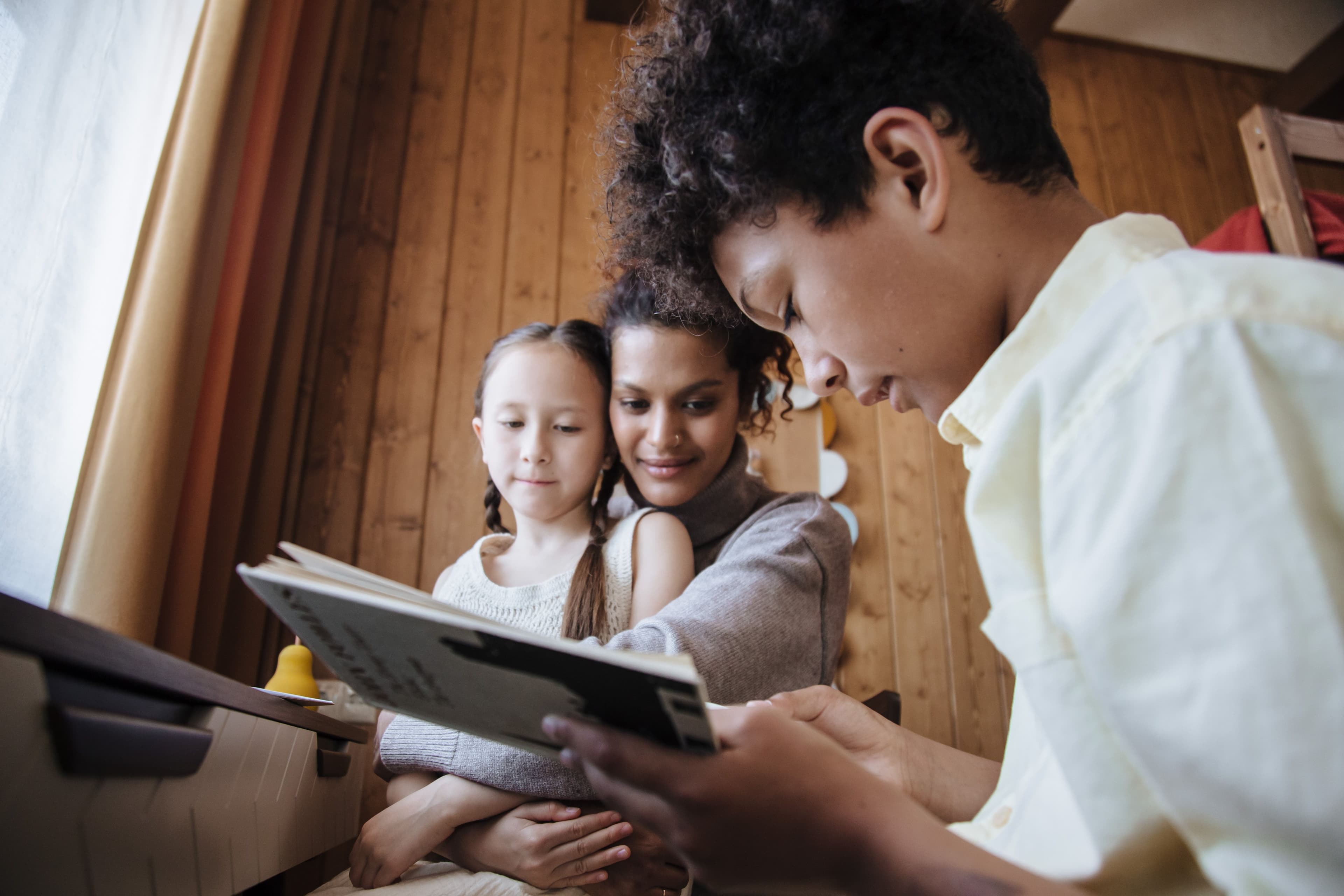
"He cries every time we mention going." A mother from Leicester sent me that message last year, about her eight-year-old son. He'd been attending the local madrassa for a year and a half, and for the last six months she'd been dreading drop-off. He wasn't being mistreated. He wasn't failing at the work. He just, refused. She'd tried bribes, consequences, conversations about duty. Nothing changed. The crying was consistent.
Three weeks into online classes with me, he was asking if we could add an extra session.
I'm not telling that story to sell anything. I'm telling it because it's not unusual. Among the families who come to me because kids refuse madrassa, that pattern, dread replaced by engagement, often within weeks, comes up again and again. The question is why.
Why children resist the madrassa
The resistance usually has a real reason underneath it, even when the child cannot articulate it.
Group class dynamics are uncomfortable for many children. In a room of fifteen children at different levels, all trying to recite at once, some children genuinely cannot hear themselves, cannot tell if they're right or wrong, and cannot get help when they're stuck. Children who are not naturally socially confident tend to get lost in this environment. They come home having sat in a class for 45 minutes without having understood something, and they know next week will be the same.
The teacher relationship is often impersonal. Not because the madrassa teacher doesn't care, many of them care deeply, but because with fifteen students in 45 minutes, the average interaction with any one child is three minutes. A child who doesn't have a relationship with the teacher is less likely to try, less likely to ask, and less likely to want to go back.
Some children have specific sensory or learning differences that make the madrassa format very difficult. A busy, noisy classroom with multiple children reciting aloud simultaneously is a genuinely hard environment for a child with auditory sensitivity or attention differences. I've written specifically about online Quran for kids with ADHD for families in this situation.
And sometimes, sometimes, the madrassa teacher's approach was harsh enough that the child has associated learning the Quran with being criticised or embarrassed, and the refusal is a completely rational response to an unpleasant experience.
What online changes
The single biggest change is that the child is the only student in the room.
When I'm teaching a nine-year-old on Zoom, every minute of that session is for him. If he's struggling with a specific letter, we stay there until it's clearer before moving on. If he's having a hard day and needs five minutes of easy revision before tackling anything new, I notice that and adjust. If he makes a mistake, I correct it privately, between him and me, no peers watching.
Location also matters. The child is at home. They are already in a space they associate with comfort. They don't have to get in a car after school, sit in a waiting room, manage the social dynamics of a shared classroom. The transition cost is small, put the laptop on, wait for the Zoom link to open.
For children who refused the madrassa specifically because the environment felt overwhelming, this difference is everything. The content is the same. The rules of Tajweed are the same. The effort required to learn Arabic letters is the same. But the environment is designed around the child rather than the child being managed inside an environment designed for twenty.
The detailed comparison of online Quran versus local madrassa for Western children covers the structural differences in more depth if you want the full picture before making a decision.
If your child is refusing and you've run out of ideas to fix it locally, try one online lesson before giving up. Book a free 30-minute trial here. Bring the child as they are, reluctant is fine. I've seen reluctant turn into engaged before the session ends.
What to do before the first online class
If your child has had a negative madrassa experience, the framing of the online class matters.
Don't present it as "this is the same as madrassa but on a computer." For a child who has strong negative associations with madrassa, that framing will land badly. Instead, present it as genuinely different: "You're going to have your own private teacher. Just you. You don't have to compete with anyone or perform in front of anyone."
Let the child have a small amount of choice in the setup. Which device they use. Whether they sit at the kitchen table or on the sofa. Having their own water bottle nearby. These are small things but they signal that this experience is different from the institutional setting that didn't work.
Tell them it's one lesson and then they decide whether to continue. No pressure. No commitment. Thirty minutes and then they get to say how they felt about it. Children who are given that control are significantly more relaxed going in than children who feel like a decision has already been made for them.
What the first lesson actually looks like
The first thing I do with a reluctant learner is not open the Qaida.
I spend the first five minutes finding out what they already know, what they enjoy, what they find hard. Not in a formal assessment way, in conversation. "Can you recite any Surahs you know from heart? I'd love to hear one." Most children, even the ones who've had a hard time at madrassa, can recite Surah Al-Ikhlas or Al-Nas. Asking them to do that is asking them to succeed in the first two minutes of the lesson. The tone of the whole session shifts when it starts with success.
After that, I find out what hasn't been working. Not by asking the child to describe what was wrong, that can feel like a complaint against someone, but by listening to them read for a few minutes and noticing where the hesitation and the errors are. I can usually tell within ten minutes whether the child is behind because they haven't been taught well, or whether they're behind because they weren't engaged, or whether they're actually not as behind as the family thought.
By the end of thirty minutes, the child has had a complete session and I can tell the parent specifically: here's what your child knows well, here's what's missing, here's what the first month would look like. The child has been listened to for thirty minutes. That is, for many children who struggled in group settings, a genuinely new experience.
For parents who feel guilty about stopping the madrassa
Many parents I speak with have a complicated feeling about withdrawing their child from the local madrassa, particularly if it's the mosque they attend and the teacher is someone they know. The community dimension is real, and I don't want to dismiss it.
A few things are worth holding together: withdrawing from group Quran instruction is not withdrawing from the community. Your child can still attend Friday prayers, still be part of weekend events, still have friends from the mosque community. The Quran instruction being separated from the mosque setting doesn't sever any of those things.
The Quran education itself is what you're protecting. A child who goes to the local madrassa under protest for six years and learns to recite badly, with errors, without understanding, has fulfilled an obligation on paper but missed something in practice. A child who learns online in 1-on-1 sessions, actually progresses, actually comes to know what they're reciting, that child has something real.
The Quran classes for kids programme I run is specifically designed for Western-raised children who may be learning in a non-Muslim majority environment and who need a teacher who understands their context, not just the subject.
For children who refused because of one bad experience
This needs naming separately, because it's common enough and the damage it does is worth taking seriously.
A teacher who shouted at a child, hit a child, publicly humiliated a child, or consistently communicated that the child was not good enough has created an association in that child between the Quran and fear or shame. That association does not just go away when the teacher changes. It needs to be actively rebuilt through positive experiences.
The way I rebuild it is slow and deliberate. I do not push. I notice what the child does well and name it. I make corrections without drama, "try that again like this" rather than "that's wrong." I bring small moments of enjoyment into the session: a Surah the child loves to recite, a question they had about what a word means, a brief explanation of the story behind a verse they've memorised. The goal in the first month with a child who has been hurt by the learning experience is not maximum progress. It's rebuilding the association so that progress becomes possible.
The guide on keeping kids motivated in online Quran classes has specific strategies for the ongoing engagement piece once the initial barrier has been cleared.
The short version
If your child refuses the local madrassa, the refusal is usually communicating something real: the environment doesn't work for them. Online instruction changes the environment dramatically, one-on-one attention, no group pressure, home setting, a teacher whose full attention is on them.
It doesn't work for every child, and I won't pretend otherwise. But for the majority of children who refused the madrassa specifically because of the group dynamics, the performance pressure, or a difficult previous experience, the change to a private online class is enough. The content and the patience remain. The obstacles go.
If you're ready to try, book a free trial here. The trial is genuinely free and genuinely no-pressure. Thirty minutes and you'll know whether this is the right fit. That's all you need to invest to find out.
One lesson is enough to see whether something has changed. Most parents know within the first session whether the resistance is dissolving. When it is, it's usually visible in the first fifteen minutes, the child's shoulders come down, they lean forward, they try.
Frequently Asked Questions
Why does my child refuse to go to the local madrassa?
A child's refusal usually signals that the group environment is not working for them, not that they dislike learning the Quran. Common reasons include large mixed-level classes where they cannot hear themselves or get help, an impersonal relationship with a teacher split across fifteen students, sensory or attention differences, or a single harsh experience that linked the Quran to fear or embarrassment.
Can online Quran classes actually help a child who refuses madrassa?
Yes, for most children who refused because of group dynamics or a bad experience, switching to one-on-one online classes removes the obstacle that caused the refusal. The child is the only student in the room, gets corrected privately with no peers watching, and learns from home, so the content stays the same while the pressure disappears. Many parents see resistance start to dissolve within the first lesson or the first few weeks.
How should I introduce online Quran classes to a child who had a bad madrassa experience?
Present it as genuinely different, not as madrassa on a computer, by saying the child will have their own private teacher with no one to compete with or perform in front of. Give them small choices like which device to use or where to sit, and frame it as one trial lesson after which they decide whether to continue. Children given that sense of control go in far more relaxed.
Does taking my child out of the local madrassa mean leaving the mosque community?
No, withdrawing from group Quran instruction is not the same as withdrawing from the community. Your child can still attend Friday prayers, weekend events, and keep their mosque friendships while the actual Quran instruction happens privately online, where one-on-one attention is more reliable.
What happens in the first online lesson with a reluctant child?
The first lesson with Ayesha starts with conversation and an easy win, usually asking the child to recite a short Surah they already know like Al-Ikhlas or Al-Nas, so the session opens with success. She then listens to them read to find where the real gaps are, and by the end of thirty minutes gives the parent a specific picture of what the child knows, what is missing, and what the first month would look like.
Updated June 2026.
Help your child love the Quran. Explore online Quran classes for kids and the foundational Noorani Qaida course, taught patiently by a female teacher. Book a free trial class to see how your child responds.